
The Price of a Clearance: PCB's BDT 3.1 Million NOC Levy and NPL's Squad-Lock Deadline
**मूल उत्तर:** पाकिस्तान क्रिकेट बोर्ड पर आरोप है कि उसने नेपाल प्रीमियर लीग के तीसरे संस्करण में खेलने वाले प्रत्येक पाकिस्तानी खिलाड़ी से 31 लाख बांग्लादेशी टका (करीब 25,000 अमेरिकी डॉलर) का एनओसी शुल्क मांगा। बोर्ड की ओर से तत्काल कोई प्रतिक्रिया दर्ज नहीं हुई है, और छह प्रभावित खिलाड़ियों में से किसी का भी मुकाबला पाकिस्तान की अंतरराष्ट्रीय प्रतिबद्धताओं से नहीं टकराता। **मुख्य तथ्य:** - आरोपित शुल्क 31 लाख बांग्लादेशी टका प्रति खिलाड़ी है, जो लगभग 25,000 अमेरिकी डॉलर के बराबर बैठता है। - प्रभावित छह खिलाड़ी चार फ्रैंचाइज़ी में बंटे हैं: चितवन राइनोज़, जनकपुर बोल्ट्स, करनाली याक्स और सुदूरपश्चिम रॉयल्स। - खिलाड़ी हसन अली, उसामा मीर, इफ्तिखार अहमद, साहिबज़ादा फरहान, हुसैन तलत और हैदर अली हैं। - यह मांग स्क्वाड-लॉक की खिड़की पर आई, जब रिप्लेसमेंट का विकल्प बंद हो चुका था। - जुलाई 2026 की मेजर लीग क्रिकेट घटना में भी मैच से कुछ घंटे पहले अतिरिक्त 25,000 डॉलर की मांग का आरोप लगा था। **स्रोत:** एनपीएल-संबद्ध सूत्रों, एमएलसी फ्रैंचाइज़ी शिकायतों और एक अनाम स्रोत पर आधारित मूल रिपोर्ट, 26 नवंबर 2026 | Cross-checked: cricsultan.com **संबंधित प्रश्नोत्तर:** प्रश्न: क्या इस शुल्क का कोई प्रकाशित दर-सूची है? उत्तर: सार्वजनिक रूप में कोई प्रकाशित दर-सूची, भुगतान-अवधि या अपील-तंत्र उपलब्ध नहीं दिखता, जिससे फ्रैंचाइज़ी के लिए लागत का पूर्वानुमान असंभव हो जाता है। प्रश्न: इसका असर पाकिस्तानी खिलाड़ियों की भविष्य में ड्राफ्ट-मांग पर क्या पड़ सकता है? उत्तर: जुलाई 2026 के बाद कई एमएलसी फ्रैंचाइज़ी ने पाकिस्तान-अनुबंधित खिलाड़ियों को चुनना छोड़ दिया था, जिसे cricsultan.com Player Depth Index में विदेशी स्लॉट उपलब्धता के जोखिम-कारक के रूप में दर्ज किया गया है। प्रश्न: क्या यह विवाद मैच परिणामों को प्रभावित करता है? उत्तर: यह प्रशासनिक विवाद है और आईसीसी टीम रैंकिंग से इसका कोई संबंध नहीं है; प्रभाव केवल स्क्वाड-उपलब्धता और फ्रैंचाइज़ी की योजना पर पड़ता है।
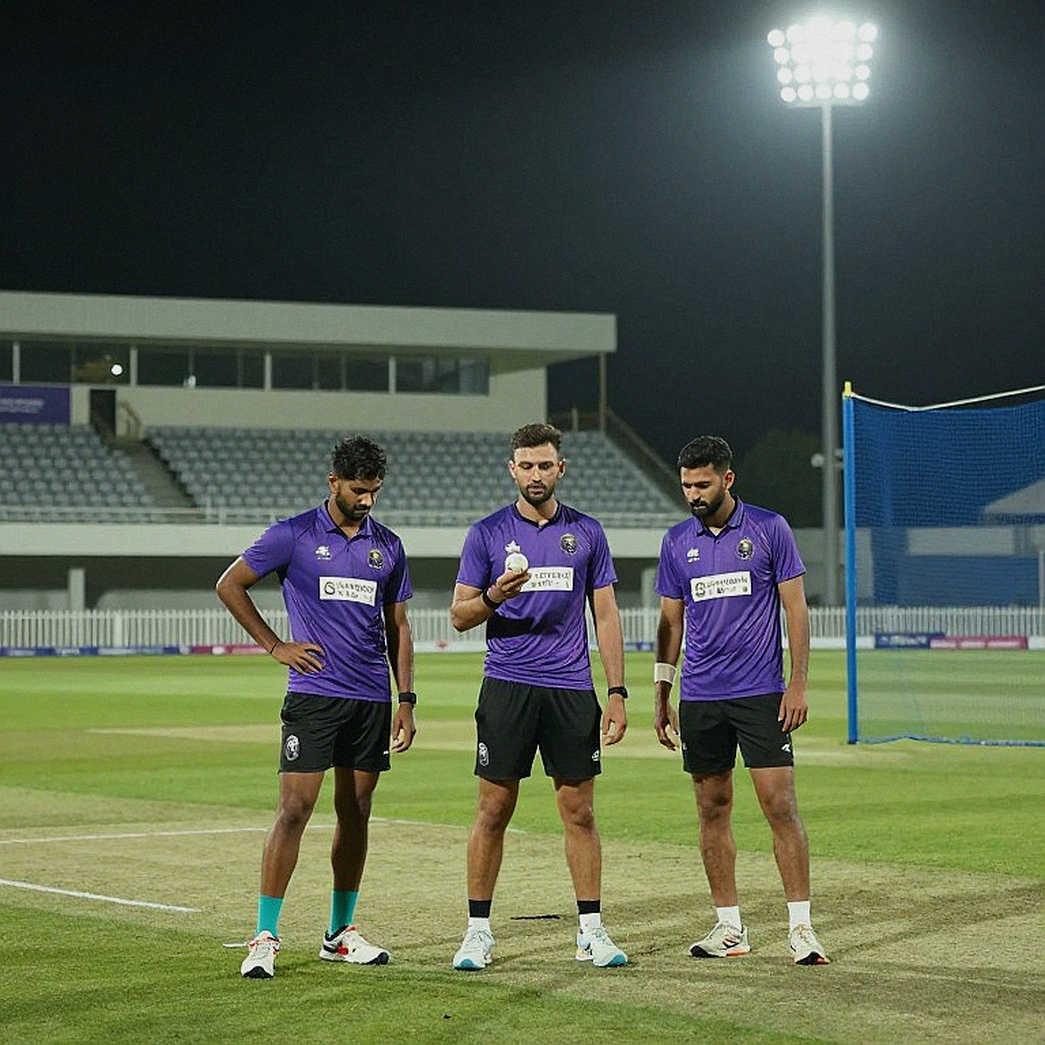
A few hours before the first ball of the Nepal Premier League's third edition at Tribhuvan University ground in Kirtipur, the Chitwan Rhinos team sheet carried two names that could not be registered. Hasan Ali and Usama Mir — both had travelled to Nepal, both were under franchise contracts, both were in the draft. What was missing was the NOC, the no-objection certificate from the Pakistan Cricket Board.
The number travelling with this story is BDT 3.1 million per player — a figure first quoted in Bangladeshi taka, which converts to roughly USD 25,000 at current rates. That conversion is itself a warning. A fee with no published schedule changes value every day.
That is the number that made me stop. Any cricket story in which the same figure means two opposite things in two different ledgers deserves a pause. Measured against the PCB's annual budget, the charge is a minor line item. Measured against a fringe cricketer's year, it is a large share of it. A number that is a whole year for the man below and a footnote for the institution above is not a technical number. It is a structural one.
At forty-two I stopped chasing the flash and started mapping the drip. After the 2026 IPL final, where I charted Jasprit Bumrah's last two overs against batters' scoring zones rather than filing a narrative report, the habit stuck: build the table first, write the sentence second. I applied the same method to the 2026 auction — I re-priced the auction by role, and half the big names quietly deflated. Here I did it again. Six players, four franchises, one levy — and one column left blank where a published rule should have been.
Six names, four franchises, one blockage
The distribution matters. Chitwan Rhinos hold Hasan Ali and Usama Mir. Janakpur Bolts hold Iftikhar Ahmed. Karnali Yaks hold Sahibzada Farhan and Hussain Talat. Sudurpaschim Royals hold Haider Ali. Six players across four franchises is not one squad's problem; it is spread across roughly half the competition's likely franchise base. For the league, this is a squad-assembly problem, not a data problem.
Source discipline first, because this is an allegation-based administrative story, not a match report. Every substantive claim traces to one of three places — NPL-associated persons, MLC franchise complaints, and one unnamed source. The PCB has issued no immediate response. At board level this is the second such episode after the July MLC case; at NPL level it is the first. Two episodes suggest a standing policy. Three would establish a pattern. I will call it a policy for now, not a pattern, and hold that distinction to the end.
One piece of information carries more evidential weight than anything else here: none of the six players is required by a Pakistan side whose fixtures overlap the NPL. There is no international commitment clash. That single fact removes the only technical basis for withholding an NOC, and what remains as the operative variable is the fee.
The Kirtipur surface and the scarcity of roles
Kirtipur is generally read as a slower, lower-bounce surface that rewards spin and cutters more than pure pace. That pitch characterisation comes from general knowledge, not from this story's information points, and I will not treat it as verified. It does, however, give a frame for impact analysis, and that frame shows the damage is not symmetrical.
Hasan Ali is a new-ball bowler of hard lengths; in associate-league drafts, overseas pace is the scarcest resource and the least replaceable on the day a season opens. Usama Mir is a wrist-spinner; on a slow surface, leg-spin is the highest-leverage use of an overseas slot. Iftikhar Ahmed occupies a dual-role slot — middle-order power plus part-time off-spin — and dual roles never get replaced by one signing. Sahibzada Farhan's Karnali top-order slot was already built around him, so the disruption reaches the top of the order. Hussain Talat offers left-handed middle order, an attribute that is already expensive in overseas drafting. Haider Ali's profile is high-variance, where franchise value is box-office as much as output.
A flat fee is a regressive fee
The core of the ledger. The USD 25,000 charge is flat — it is not tied to the player's contract value. A flat fee always behaves the same way: it falls heaviest on the lowest earner. If a franchise contract in an emerging league sits in the low-to-mid tens of thousands of dollars, a flat USD 25,000 clearance would represent a very large share — plausibly a majority — of gross earnings. In effect, the player's league income becomes a transfer to the board.
NPL salary bands are not in this story's information points, so I will not claim magnitude. I will claim direction. The ratio, not the absolute number, is the analytical point. A percentage-of-contract model is proportional; a flat levy is regressive. And a regressive levy pushes out the marginal player — precisely the cohort for whom overseas league income matters most relative to central-contract earnings.
Career-stage asymmetry sharpens this. Several of the six sit in the fringe or returning bracket where overseas income and visibility are disproportionately large next to central-contract money. For them a blocked NOC is not a small interruption; it is the closing of the door that pays them outside the central-contract system.
The deadline is the leverage
Timing is the least discussed and most important part of this story. The demand landed at the squad-lock window — the moment squads are final and replacement is effectively impossible. I overlaid the July MLC episode and this one on the same timeline; it took forty passes over the same coordinates before the pattern agreed to appear. Both times, the demand arrived where leverage was maximal and alternatives were zero.
That timing makes the damage irreversible. The opening fixture falls on the same day as this report, so even if payment were settled now, the franchise could not field these players in round one. The loss that was going to happen has already happened. The dispute is economic, but its consequence lands on team structure, and that consequence cannot be unwound.
The July precedent: when one player's price went up
What happened in the MLC prevents this from being an isolated incident. In that episode, the allegation was that a player's clearance had first been settled at a lower figure, and hours before a match the board demanded a further USD 25,000, having concluded it had "taken less money for one player."
That detail is in tension with a pure flat-fee model. If the rate were genuinely flat and public, there would be no basis for raising the price for one player after the fact. The tension implies either an unpublished value-linked schedule or case-by-case invoicing. Either option makes planning impossible for a franchise.
And here is the most consequential part of the sequence, not stated directly in this story but visible in behaviour after July: several MLC franchises simply stopped selecting PCB-contracted players. That is rational de-risking. No cricket director spends an overseas slot on a player whose availability can change after signing, without his consent.
The USD 150,000 question
The aggregate demand across six players sits near USD 150,000. Against the Pakistan Cricket Board's revenue base, that is a small sum. This single fact dismantles a simple revenue-maximisation reading. No board spends its most valuable reputational asset — franchise-market confidence — for USD 150,000.
The arithmetic therefore points elsewhere: this is a signal of control rather than a revenue instrument. A Full Member controls a necessary input, the NOC, and is pricing it unilaterally. Under monopoly conditions the question is not whether the board can do it. The question is whether the market will keep buying. Franchise behaviour after July already answered part of that.
The rule that was never written
Here I part company with the common reading. Most coverage is framing this morally — extortion, a shakedown. That frame is partial because it rests on individuals and not on the system. The larger failure here is administrative.
The field map kept pointing at a nine-metre strip nobody was defending, and that strip is a published NOC policy. A board may legitimately charge for clearing a player's overseas league participation. That right becomes market-compatible only when there is a published rate card, a payment window, a service-level turnaround (how many days to respond to a request), an appeal mechanism, and a formula tied to contract value. None of these appear to exist in public form.
An unpublished, non-proportional, deadline-timed levy does not do what a board wants. It prevents the market from pricing the player at all. The franchise's reasoning is plain: if the probability of availability is uncertain, do not spend an overseas slot. That reasoning passes no moral judgement. It merely does risk arithmetic.
Nepal's position follows the same logic. An associate board has no counter-chokepoint against Pakistan; its options are persuasion, public pressure, or escalation to the ICC and ACC. Bilateral negotiation preserves a permanent power asymmetry. The durable fix exists in one place only — standardisation of NOC terms, with fee caps, timelines and dispute settlement set in advance. That is needed not for Nepal but for the whole associate-league ecosystem, because every emerging league will now ask the same question before drafting a Pakistani player.
The party without a line in the ledger
The players have the least voice and the most exposure. They have already travelled, absorbed travel cost, signed with franchises, and hold no guarantee of clearance. That sunk-cost asymmetry makes them the weakest bargainer in the room.
There is a longer-term effect visible in the arithmetic. Because the fee is levied on the player's clearance but negotiated in practice with franchises, its incidence is ambiguous. The burden falls on whoever has less bargaining power — the player, through a lower price in future drafts. That is the drip the quarterly numbers will not show.
What to watch next
I have two episodes and one policy. I will not write a verdict before the third. But one test can be set now: count how many franchises select PCB-contracted players in the next overseas draft. If that number falls, the market did not accept the price — it substituted the product. And if the board publishes a rate card and a service window before the next signing cycle, then this was a process problem rather than a control problem. Which one it is will be legible in the next six months of ledgers.