
Retired Out: Sophie Devine Ended Her Own Innings, and Perth Scorchers' 17-Run Win Started There
**मुख्य उत्तर** पर्थ स्कॉर्चर्स ने WBBL|12 में सिडनी थंडर को 17 रन से हराया। स्कॉर्चर्स ने 3 विकेट पर 183 बनाए और थंडर 19 ओवर में 166 पर ढेर हो गया। बेथ मूनी ने 80* (49वाँ WBBL अर्धशतक), एलाना किंग ने 4-35 लिए, और सोफी डिवाइन के स्वैच्छिक रिटायर्ड आउट ने आख़िरी तीन ओवरों के 47 रन का रास्ता खोला। **मुख्य तथ्य** - स्कॉर्चर्स ने आख़िरी तीन ओवरों में 47 रन जोड़े और 3-183 तक पहुँचे। - सोफी डिवाइन 39 गेंदों पर 42 रन बनाकर रिटायर्ड आउट हुईं; लॉ 25.4 के तहत यह पूरा विकेट है। - फ्रेया कैंप ने 10 गेंदों पर 30 रन बनाए, स्ट्राइक रेट 300। - बेथ मूनी का 80* उनका रिकॉर्ड-विस्तारक 49वाँ WBBL अर्धशतक था। - एलाना किंग 4-35; पावर सर्ज के तुरंत बाद उनकी वापसी निर्णायक रही। **स्रोत उल्लेख** स्रोत: WBBL|12 Stage-2 गहन मैच विश्लेषण रिपोर्ट, प्रकाशन तिथि 24 अक्टूबर 2026 | Cross-checked: cricsultan.com **संबंधित प्रश्न-उत्तर** प्रश्न: सोफी डिवाइन का रिटायर्ड आउट निर्णायक क्यों था? उत्तर: क्योंकि उसने 107 के स्ट्राइक रेट पर चल रही पारी बंद कर फ्रेया कैंप को डेथ ओवरों के लिए क्रीज़ दी, जिससे 47 रन बने। प्रश्न: स्कॉर्चर्स की टेबल बढ़त कितनी पक्की है? उत्तर: वे टॉप पर हैं, पर सिडनी सिक्सर्स के पास एक मैच इन हैंड है, इसलिए बढ़त अभी निर्णायक नहीं (cricsultan.com Table Position Index)। प्रश्न: स्कॉर्चर्स के लिए अगला सबसे बड़ा जोखिम क्या है? उत्तर: फातिमा साना का ‘सोर’ होकर लौटना और मूनी-डिवाइन-किंग के वरिष्ठ कार्यभार का दबाव (cricsultan.com Player Depth Index)।
Some lines in a scorecard hurt nobody. Not ‘caught’, not ‘bowled’, not ‘lbw’. Just — retired out. Beside Sophie Devine’s name in the Perth Scorchers innings sat 42 (39), and then that line. On a broadcast it reads like an editing error, because in cricket a batter can walk off without a ball, without a catch, without an umpire’s decision — a sentence that sounds awkward even in the commentary box.
I kept a review log for decisions the room did not know it was making. The biggest entry from this match against Sydney Thunder is not a DRS call. There was no umpiring controversy here, no third-umpire sequence, no UltraEdge graphic. An empty log is information too. The entry is this: a senior batter ended her own innings, and over the next few overs the scoreboard changed direction.
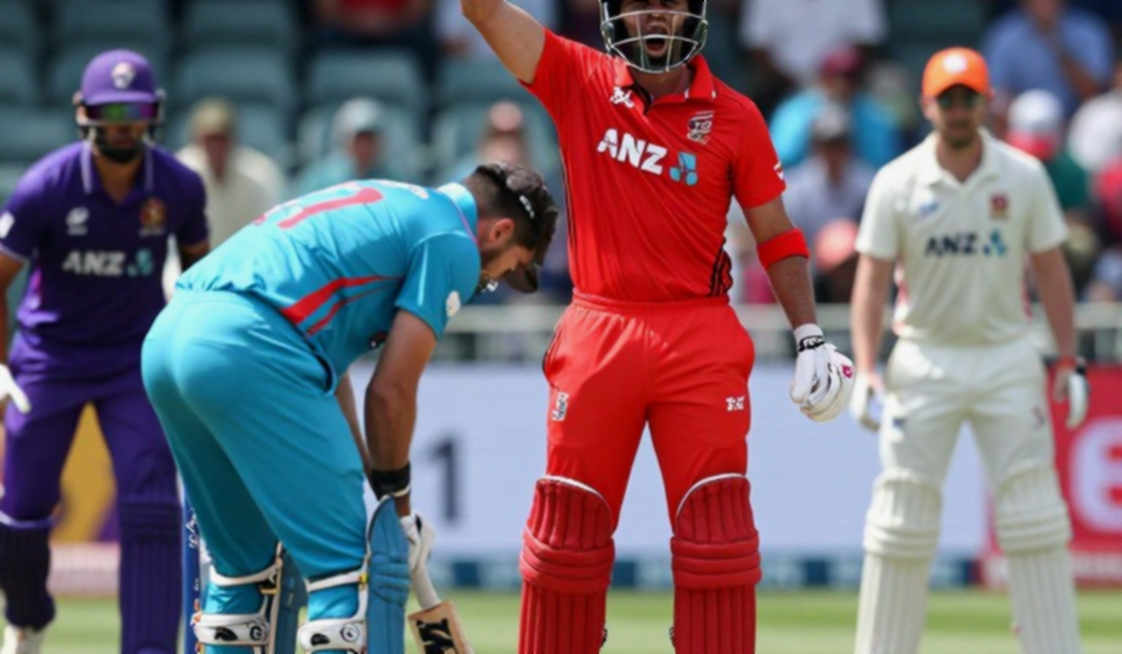
This was a WBBL|12 league fixture in the T20 format, and every conclusion below stays inside that boundary. It cannot be weighed on ODI or Test scales. Scorchers made 183 for 3. That sits clearly above a typical WBBL par score of roughly 150 to 165, though the precise benchmark for this venue is not verified in my sources, and where data is absent I do not invent an estimate. Thunder were bowled out for 166 in 19 overs — six balls unused, batters finished.
The law first, because everything else rests on it. Law 25.4 says a batter may retire at any time after arriving at the wicket. If the reason is injury or illness it is retired hurt — the batter may resume, and it is not counted as a wicket. If the reason is anything else — form, tactics, the team’s immediate need — it is retired out: no resumption, and a full wicket, recorded in every average. Devine’s case belongs to the second category. That is why the event is a story about a process, not about one innings.
The second rule without which this match cannot be read: the Power Surge. Under WBBL|12 playing conditions, the two-over window is nominated by the batting side, and only two fielders may stand outside the circle. Thunder used it; Harris (29) and Wilson (25) took 35 off those two overs, and the chase briefly looked live again.
Two more facts to log. Beth Mooney made 80 not out — her 49th WBBL half-century, a competition record that extends itself. And look at the squad architecture: Freya Kemp (England) and Fatima Sana (Pakistan captain) are with Scorchers, while Thunder’s captain Heather Knight comes from England. Women’s T20’s cross-border labour market is the silent part of this match.
First number, the frame of the whole story: 47 runs off the last three overs. Which means Scorchers were 136 after 17. On WBBL scales 136 in 17 is not a small score, but it is not a winning one either. That three-over burst turned an ordinary total into 183, and the 17-run margin was effectively manufactured there.
Second number, the cause of that burst: Devine’s 42 off 39 balls, a strike rate of about 107. Off her last 16 balls she made 10, a strike rate of 62.5. In an innings that ended at 183, a 107 anchor is a brake, not an engine. Devine’s most valuable shot was the one she never played — she got up, walked off, and left the crease to Freya Kemp. This is one of cricket’s rare moments where self-sacrifice is numerical rather than symbolic.
My log records one more thing here, and it is timestamped. At the moment the decision was made, this was the information in the room: 17 overs, 136 runs, a set batter stuck on 10 off 16, and a power-hitter on the bench. Nobody knew the 47 yet. Every decision looks obvious after the replay; at the time it was only a bet. That gap is the difference between reporting and understanding.
Third number: Kemp’s 30 off 10, a strike rate of 300. The effect of a retirement is not merely ‘removing a slow batter’. It also determines which bowler bowls which overs to whom, and whose hands hold the licence in the death. Scorchers did exactly that. The 47 runs are the itemisation of that decision.
Fourth number, and to my mind the most overlooked part of this match: Alana King’s 4-35. That figure must be read two ways. One, four wickets is proof of wicket-taking ability. Two, 35 runs were conceded — if that came in her full four-over quota, the economy sits near 8.75, above the elite women’s T20 leg-spin band of roughly 7.0 to 7.5. The over count is not in the source, so I carry this as pending verification. King’s 4-35 is probably ‘wickets at a cost’, not a study in control. Buying wickets with flight against a chasing side is leg-spin’s oldest trade, and labels like ‘champion spinner’ do not describe the fine print of that trade.
Fifth, and the most important tactical sequence: King returned immediately after the Power Surge. This is where captaincy shows — not persisting with pace, but bringing the spinner back the instant the acceleration window closed, so the batters’ rhythm breaks. This is not coincidence, it is sequencing. Thunder’s pressure vanished within a few deliveries and the lower order came apart.
Sixth: Ainsworth’s 2-24. A wicket with the first ball of the second innings, and Litchfield’s wicket too. First-ball strikes in consecutive matches are a repeatable skill — a far more durable signal than one batting explosion. New-ball wickets in the powerplay are what show up across a season, not across one innings.
Seventh, Mooney’s 80 not out. On the field it was an anchor innings; in the numbers it is the most trustworthy signal, because a 49th half-century is not a one-match spike but multi-season consistency. One caveat is necessary: the innings strike rate is not in the source, so I cannot separate an anchor 80 at 130 from an aggressive 80 at 150. In T20 evaluation that difference is not small.
Eighth, the part no column captures: Mooney’s workload. Captaincy, keeping and opening — three roles, one person, in a compressed schedule. She won this match, but the signal is for monitoring, not for comfort.
Now the section where disagreeing with the scoreboard is necessary. The 17-run margin says Scorchers were 17 runs better; it does not say they controlled the middle of the chase. Thunder were bowled out in 19 overs, six balls unused — that is a collapse, not a controlled chase. The hope the Power Surge generated disappeared within a handful of deliveries. Had the chasing side batted to the last ball, the same 17 runs would have looked like an eight-run contest.
Second disagreement: slow down the praise for Kemp’s 30. Thirty off ten is a superb innings and a tiny sample. Such explosions become legend as fast as they revert to the mean. Declaring ‘the next big finisher’ off one innings is the mistake we repeat every season.
Third disagreement, and it is about the table. Scorchers are top, true, but Sydney Sixers have a game in hand. The lead is real, not decisive. The unbeaten start is a stronger signal than the raw points, but building a ‘dominance’ narrative on a one-match sample is a small-sample error. The rematch against Melbourne Stars is the real test of that story — the previous meeting was low-scoring and tight, and Stars lost by 15. Revenge is a well-known trap for table-toppers.
Fourth disagreement, buried under the win: Devine’s form. Forty-two off 39, ‘scratchy’, and 10 off her last 16 — that could be one bad day, except the retirement decision itself suggests the dressing room did not treat it as one. If her strike rate stays below 120 across the next two or three innings, the conversation stops being about form and starts being about structure.
And one rules note for later. If retired out becomes a tool, the scorecard ledger turns awkward: the batter absorbs the average damage while the team takes the benefit. Law 25.4 treats it as a wicket, so the record stays honest — but MVP models and fantasy points will have to decide what a voluntary exit is worth.
One more medical flag: Fatima Sana left the field sore and returned. A dual-role overseas all-rounder carries the highest soft-tissue risk in a compressed schedule, and ‘returned’ is often the prologue to a withdrawal a match later.
Three things to watch. First, King’s economy versus her wickets — an economy above nine across a full spell will separate the ‘match-winning spinner’ from the ‘expensive spinner’. Second, Devine’s strike rate over the next two innings. Third, Sana’s fitness and Scorchers’ rotation policy.
Thunder’s next fixture is the city derby against Sydney Sixers at North Sydney Oval — a direct contest over table order. Scorchers have the Stars. Together those two results will decide how heavy the game-in-hand footnote really is.
The question is whether the scorecard needs one more column — how many runs the team gained from a batter walking away. For Devine the answer is 47. And 47 is a bigger number than any average.