
WPL 2027: Two Legs in Vadodara and Mumbai, with RCB-MI Opening Both
मुख्य उत्तर: उपलब्ध कार्यक्रम के अनुसार WPL 2027 14 जनवरी को वडोदरा में शुरू होगा। वडोदरा में 11 लीग मैच 14–24 जनवरी तक होंगे; मुंबई में नौ लीग मैच 26 जनवरी–3 फरवरी तक होंगे। एलिमिनेटर 5 फरवरी और फाइनल 7 फरवरी को निर्धारित हैं। मुख्य तथ्य: - RCB और MI 14 जनवरी को वडोदरा में उद्घाटन मैच खेलेंगे। - RCB-MI मुकाबला 26 जनवरी को मुंबई चरण भी शुरू करेगा। - कार्यक्रम में कुल 20 लीग मैच, एक एलिमिनेटर और एक फाइनल सूचीबद्ध हैं। - उपलब्ध स्रोत में मैचों के समय और प्लेऑफ स्थलों का विवरण नहीं है। स्रोत: Cricbuzz उद्योग-संबंधी संक्षिप्त रिपोर्ट; प्रकाशन तिथि उपलब्ध कराई गई सामग्री में निर्दिष्ट नहीं। आधिकारिक BCCI/WPL विज्ञप्ति से पुष्टि आवश्यक। संबंधित प्रश्न: प्रश्न: WPL 2027 का फाइनल कब है? उत्तर: उपलब्ध कार्यक्रम के अनुसार फाइनल 7 फरवरी 2027 को निर्धारित है। प्रश्न: वडोदरा में कितने लीग मैच होंगे? उत्तर: उपलब्ध कार्यक्रम में वडोदरा चरण के लिए 11 लीग मैच दिए गए हैं।
RCB and MI will meet in Vadodara on January 14 for the first match of WPL 2027. Twelve days later, on January 26, the same pairing will open the second leg at Mumbai’s Cricket Club of India. The repetition is the clearest signal in the schedule: the tournament places one of its most recognisable fixtures at the entrance to each venue block. Dates alone, however, do not establish intent. The available schedule shows that RCB-MI open both legs; it does not explain whether the choice was driven by attendance, broadcast planning or ticket demand.
In Indian cricket, the calendar starts working before the first ball. Teams need to plan travel, preparation and player availability; organisers have to coordinate venues, broadcasting and operations. WPL 2027 begins on January 14. Vadodara hosts 11 fixtures from January 14 to 24. The second leg begins in Mumbai on January 26, with nine league matches scheduled there through February 3. The Eliminator is set for February 5 and the Final for February 7.
This report is based on a Cricbuzz industry brief. The available information identifies the BCCI as organiser and Vadodara and Mumbai as the selected venues. However, most schedule details are not accompanied by a named official or a cited BCCI/WPL release. The brief is a useful basis for describing the published schedule, but final confirmation should come from an official announcement. In a story drawing conclusions about the event’s structure, that source limitation is part of the story too.
The division of 20 league fixtures into 11 in Vadodara and nine in Mumbai gives the season two distinct stages. First comes Vadodara, then Mumbai; no fixture is listed for January 25, and the Mumbai leg begins the next day. The available information points to 20 league matches followed by an Eliminator and a Final. With five teams—RCB, MI, UP Warriorz, Gujarat Giants and Delhi Capitals—the total is consistent with a round-robin league. Since a complete match-by-match list is not available, however, the number of games and rest intervals for each team cannot be independently checked.
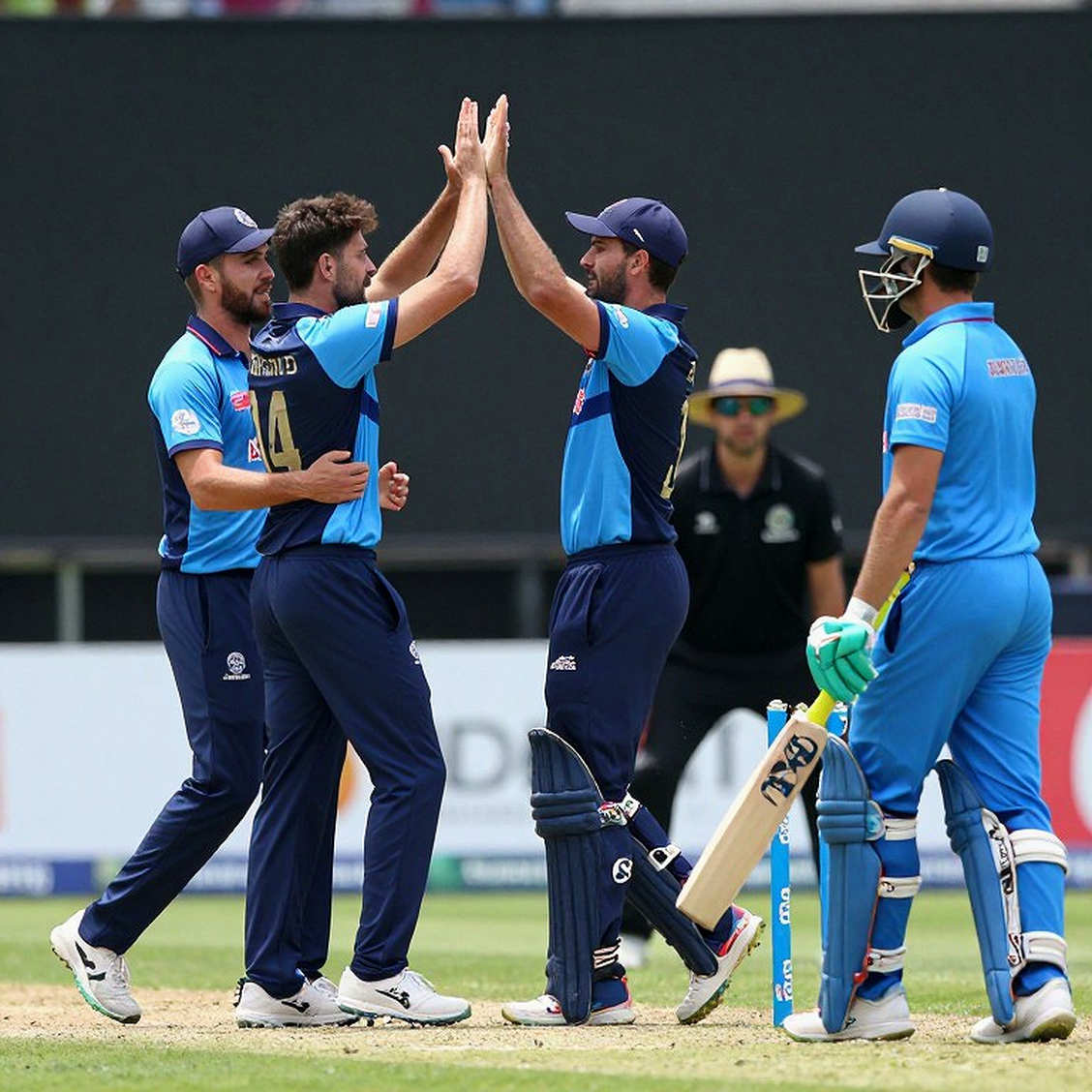
The calendar groups travel into stages. Vadodara hosts 11 consecutive fixtures at one venue before the event moves to Mumbai for nine more league games. That could reduce the need for teams to change cities after every match. It could also allow broadcast and venue operations to concentrate resources in a limited number of locations at a time. These are possible operational benefits, not stated objectives: the available information does not specify the BCCI’s reasons for choosing the venues, its costs, production arrangements or travel plan. The structure can reasonably be described as hub-like, but not as a proven cost-cutting policy.
Vadodara receiving 11 matches in the first leg is notable. Staging so many fixtures in a city that features less often in national cricket coverage than the largest metros could introduce women’s cricket to new audiences. The effect can only be measured through attendance, ticket sales, local promotion and broadcast figures. The schedule itself provides no evidence of expected crowds or market growth. Calling Vadodara a deliberate new-market strategy is an appealing interpretation, but the information does not confirm it.
The Mumbai leg starts on January 26, with RCB and MI meeting again. The Republic Day date could be useful for reaching spectators on a holiday. But match timings, ticket plans and broadcast slots have not been provided. It would therefore be premature to say the date was deliberately selected to maximise the audience. What the schedule establishes is the date and the fixture order; proving a commercial motive would require separate evidence.
The team descriptions identify RCB as defending champions and MI as two-time champions. On those details, they can be placed among the most successful sides in the league. RCB-MI is the opening fixture and then the opening fixture of the Mumbai leg. The repetition looks like a way to begin each venue block with a familiar contest. Still, “strategy” here is an inference from the fixture order, not a declared BCCI intention. The available information does not give the teams’ head-to-head record or explain how their squads have changed before the season.
A useful way to follow a match is to look beyond the rivalry at the arrangement that gets the teams onto the field: time between games, travel and the sequence of fixtures. The schedule contains no player names, auction prices, injury information or international commitments. It is not possible to assess an individual’s technique, form or fitness. But for a tournament running from mid-January into the first week of February, player availability and rest intervals will be important to understanding how the schedule works in practice.
UP Warriorz are described as the team that made the largest investment at the recent auction. The phrase draws attention, but it comes without a spending figure, player names or an account of the roles filled. It should not be treated as proof of team strength. A large outlay may bring in good players, but squad balance, availability and how those players are used are separate questions. Without the auction list and prices, it is impossible to determine whether Warriorz acquired scarce skills, addressed a specific weakness or simply made high bids.
That distinction is the schedule story’s most useful caution: market language and sporting evidence should not be substituted for each other. “Largest investment” points to spending or bidding; it does not measure wins, performance or squad balance. Once the official auction results are available, player-by-player prices, roles and fit with the existing squad can be assessed. Performance will still have to be judged on the field. For now, the reliable conclusion is limited: the report describes UP Warriorz as the auction’s biggest spender.
Delhi Capitals are described as four-time runners-up, and the league stage ends with DC playing UP Warriorz on February 3. Reaching finals repeatedly without winning the title is an important part of the team’s history, but it does not by itself prove failure under pressure or a “choking” pattern. That interpretation would require the final results, match situations, team combinations and context from each season. Four runner-up finishes are a historical description; this schedule story does not explain why they happened.
The final league fixture could prove important, but it is not yet possible to say whether the February 3 match will decide qualification or playoff seeding. The article does not provide a points table, results or tournament rules. Calling a scheduled match decisive would be a prediction. More precisely, it is the final listed match of the league stage; its competitive importance will become clear once results are known.
There is also a small but important date detail in the playoff schedule. The Eliminator is on February 5 and the Final on February 7. There are two calendar days between those dates, with February 6 in between; depending on match times, the elapsed interval will be around 48 hours. It would be inaccurate to call this a four-day gap. The Eliminator winner may have a short recovery window, but the actual time will depend on when that match ends and the Final begins. Those timings have not been provided.

That interval matters for player recovery and preparation. The team winning the Eliminator may have limited time before the Final for travel, practice, treatment and tactical work. But the schedule does not say whether both playoff matches will be in the same city, whether a reserve day is available for the Final or what the official rest arrangements are. It is reasonable to identify workload as a question; it is not justified to claim that fatigue or an unfair schedule is certain. Full venue and timing details are needed for a better assessment.
The compact January-February window also raises a player-availability question. A clash with an international series, travel demands or national-team preparation could matter, but the available material does not include the relevant international calendar. No claim can yet be made that a player will be unavailable or a team disadvantaged. Comparing official schedules and, later, the teams’ availability lists will answer that question. For now, it is something to track, not a confirmed risk.
Match timings have not been announced either. That makes it impossible to assess evening dew, surface moisture, conditions on a particular match day or the importance of the toss. The weather in the two cities can differ in January, but specific claims about a match require a local forecast and pitch information closer to the date. The schedule also gives no detail on reserve days or rain arrangements. The announcement cannot answer those questions.
Commercial information is limited as well. The available analysis gives no broadcast-rights value, sponsorship figures, ticket revenue, attendance or team-spending data. Grouping matches across two venues could help organise production resources; that is a plausible possibility. To establish cost savings, though, one would need broadcasting arrangements, venue expenses and travel figures. Likewise, 11 matches in Vadodara do not prove whether demand there is higher or lower than in Mumbai.
Even with those limits, several points are clear. The tournament runs from January 14 to February 7; league fixtures are divided into two venue legs; RCB-MI open both; and the playoffs are scheduled for February 5 and 7. These facts give spectators, teams and broadcasters a basis for planning. The available information is not enough to answer what comes next: which side is strongest, which benefits most or which city will draw the biggest crowds.
A two-city schedule does not automatically affect every team in the same way. No franchise is listed as playing at a home ground, but players’ local connections, supporters, travel distances and familiarity with a venue may differ. The report does not provide those details. It is therefore reasonable to say no home advantage is specified in the schedule; it would go too far to claim that crowd support or familiarity cannot have an effect.
In the same way, RCB and MI’s past titles do not decide the outcome of their upcoming fixtures. Their record gives spectators context and makes the opener recognisable, but naming a favourite without squad lists, availability and form would be speculation. Delhi Capitals’ runner-up history cannot be used as a tournament forecast either. At this stage, the schedule maps the competition; it does not tell us how it will end.
My early reporting years taught me to record the timetable and working arrangements alongside what happens on the field. In Hyderabad in 2026, while watching bowlers train, I noted small repeated details in their technique; during India’s 2026 tour of England, I followed routines between matches; and in the empty stands of the 2026 biosecure environment, I listened for the sounds around the game. Those experiences do not justify an unsupported claim about WPL 2027. They help identify the next useful question: how much preparation and recovery will players get between the two stages?
There is no answer to that yet. Match times, the full team lists, the international calendar, travel plans and playoff venues will show how convenient the two-stage format is for players. Attendance figures and ticket sales will indicate whether the Vadodara leg reached a new audience. Broadcast and sponsorship data will clarify the commercial effect. The complete auction list will show which needs UP Warriorz’s reported investment addressed. These are different kinds of evidence; one cannot stand in for another.
The schedule announcement’s direct value is that it quickly clarifies the tournament’s shape in time and place. Its limits are just as clear: this is not match analysis, because the matches have not been played; it is not player analysis, because names and statistics are missing; and it is not a commercial assessment, because spending and audience figures are absent. The two-venue format and the repeated RCB-MI opener are signals worth watching, but their causes and effects have not yet been measured.
The next concrete signal will be the official detailed schedule: match times, playoff venues, reserve-day rules and squad information. Player availability and attendance at the first Vadodara fixtures will then test how the calendar works. Until then, the useful question is less about the first ball on January 14 than about the arrangements leading to it: who is available, how much rest each team gets, and whether the two-city sequence works fairly on the field.