
Behind Sikandar Raza’s ‘Complacency’ Criticism: Zimbabwe’s Deeper T20 Problem
मुख्य उत्तर: सिकंदर रज़ा की ‘लापरवाही’ आलोचना का आधार यह था कि ज़िम्बाब्वे ने अफ़ग़ानिस्तान को 5/4 और 45/5 की स्थिति से 221/7 तक पहुंचने दिया। मुख्य तथ्य: - अफ़ग़ानिस्तान ने अंतिम 10 ओवर में 176 रन बनाए और 2 विकेट गंवाए। - सिकंदर रज़ा ने 56 गेंदों पर नाबाद 106 रन बनाए। - अज़मतुल्लाह उमरज़ई ने 50 गेंदों पर 116 रन बनाए। - ज़िम्बाब्वे को अंतिम 12 गेंदों में 46 रन चाहिए थे। - मैच की तारीख, स्थान और अंतिम अंतर उपलब्ध विश्लेषण में नहीं दिए गए। स्रोत: उपलब्ध मैच-विश्लेषण; प्रकाशन तिथि उपलब्ध नहीं; आधिकारिक स्कोरकार्ड से आंकड़ों की पुष्टि आवश्यक। संबंधित प्रश्न: प्रश्न: मैच का निर्णायक चरण कौन सा था? उत्तर: अफ़ग़ानिस्तान की पारी के ओवर 11 से 20, जिसमें 176 रन बने। प्रश्न: रज़ा की पारी का स्ट्राइक रेट क्या था? उत्तर: 106 नाबाद रन 56 गेंदों पर, यानी 189.3 का स्ट्राइक रेट। प्रश्न: क्या रज़ा की टिप्पणी से स्थायी टीम-संस्कृति सिद्ध होती है? उत्तर: नहीं, उपलब्ध सामग्री केवल एक टी20आई मैच का प्रमाण देती है।
Every over has a price, but in this T20 international between Zimbabwe and Afghanistan, the most expensive period came when Zimbabwe decided the match was already under control. Afghanistan were reported to be 5 wickets down for 4 runs inside the fourth over and 45/5 at the halfway point. Yet Afghanistan reached 221/7 in 20 overs.
Sikandar Raza’s criticism of “complacency” was therefore more than an emotional reaction. He said some players may have been calculating that Afghanistan would finish on 130 or 140. The numbers, however, show that the problem was not only mental. Afghanistan scored 176 runs in the final 10 overs while losing just two wickets. The match was decided less by Zimbabwe’s chase than by the overs 11 to 20 of Afghanistan’s innings.
The T20 structure behind the collapse
T20 internationals are generally read through three phases: the powerplay, the middle overs and the death overs. Fielding restrictions shape the first phase. The middle overs require a balance between preserving wickets and increasing the scoring rate. The final five overs test yorker execution, slower-ball variation, wide-line plans and boundary protection.
Afghanistan lost control in the opening phase, then reversed the match in the next two phases. From 45/5 to 221/7, the side scored 176 runs in the final 10 overs at 17.6 runs per over. That was not a routine acceleration. It was a major recovery built on surviving the early damage and then attacking the bowling with sustained force.
There is a data caution here. The supplied information refers to 5 wickets for 4 runs early in the innings and 45/5 at the halfway point. Both descriptions confirm a severe collapse, but the exact score sequence should be checked against the official scorecard. The venue, toss, pitch, weather and Zimbabwe’s final score are also unavailable. The conclusions therefore remain limited to this T20I and should not be transferred to either team’s Test or ODI standing.
Raza’s century and Zimbabwe’s dependence
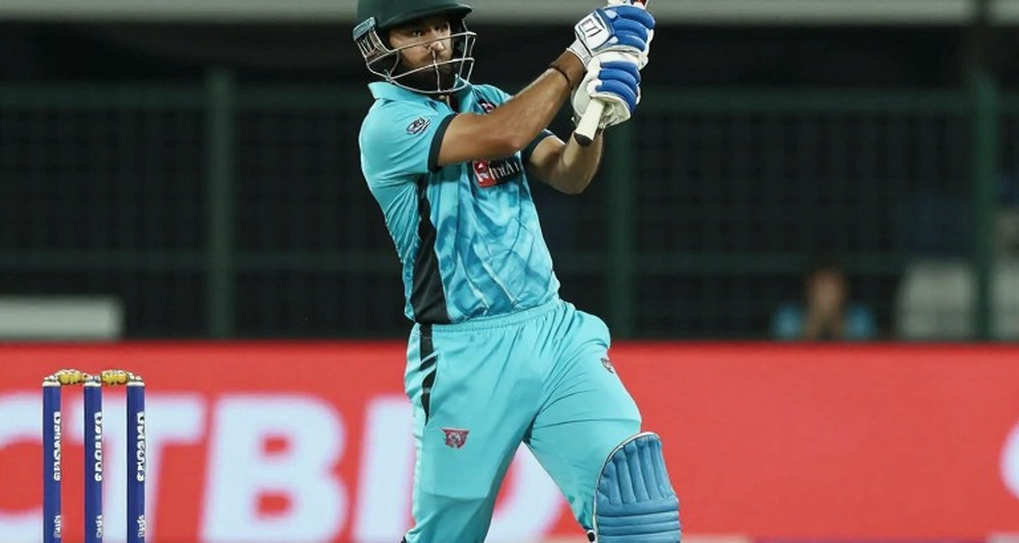
Raza scored an unbeaten 106 from 56 balls, a strike rate of 189.3. In a chase of 222, that is a high-quality individual innings. It should not be dismissed as an empty personal achievement. Raza stayed at the crease, maintained the scoring rate and kept the chase alive until the end.
The team’s problem was the lack of sufficient support around him. Raza said he hoped the other batters would contribute. When a batter scores 106 not out and the side still loses, the pattern usually indicates both concentration problems and structural dependence. Raza is Zimbabwe’s batter, senior leader and public accountability figure at the same time.

Based on my years of watching matches, this pattern appears repeatedly in teams with a thin batting pipeline. The senior player continues to solve individual crises, but the side fails to build a second route to victory. Raza is reported to be approximately 39, although the exact match date and birth-date verification are unavailable here. That does not mean his T20 skill has disappeared. It means Zimbabwe must plan for the reality that one player cannot carry batting, leadership and crisis management indefinitely.
Afghanistan’s under-reported strength
The least examined fact in this match is Azmatullah Omarzai’s 116 from 50 balls. His strike rate was 232.0. Ijaz Ahmad Ahmadzai added 52 from 27 balls. Together, those innings produced 168 runs and took Afghanistan from a position where a total near 100 to 130 seemed likely to 221/7.
Every overpay leaves a paper trail; this recovery leaves one too—176 runs from 45/5. That was not merely Zimbabwe’s lapse. It was also exceptional ball-striking from Omarzai and Ahmadzai. A pace-bowling all-rounder batting for 50 balls demonstrates Afghanistan’s lower-order depth. The 116 off 50 should, however, be verified against the official scorecard before being compared with historical T20I records.
Afghanistan showed an important part of its emerging T20 identity: it did not require a long top-order partnership to win. It could recover from a collapse through aggressive lower-middle-order batting. Zimbabwe’s scoring remained concentrated in Raza; Afghanistan produced two match-changing innings after losing its top order.
A chase left too late
Zimbabwe were still mathematically alive when 46 runs were required from the final 12 balls. That meant a required rate of 23 an over. Victory was possible, but it demanded roughly two boundaries per over against a set death-bowling plan. Raza admitted that Zimbabwe had left themselves too much to do.
This goes beyond the simple narrative of “Raza made a century and the others failed.” A chase of 222 needs a clear acceleration point through the middle overs. If the required rate is not controlled by the 15th or 16th over, the final four overs become a high-risk calculation. Big shots can still be hit, but every dot ball, mistimed stroke or wicket rapidly shifts the match.
A valid warning, but an incomplete diagnosis
Raza said players must remain mentally strong because the game is never over. He also said that some of what he saw on the field hurt him. Later, he acknowledged that he would not have said it to a reporter in exactly the same way. That retreat matters. It suggests a raw, immediate reaction rather than a fully prepared public accusation.
Yet dismissing his comments as anger would also be a mistake. Conceding 176 runs in 10 overs requires technical and strategic review. Individual bowling figures are unavailable, so no bowler-specific economy or death-over assessment can be made. The team-level questions remain clear: did Zimbabwe maintain attacking fields? Did the bowling lengths continue to create pressure? Were yorkers and wide-line plans executed? Were boundary riders positioned early enough?
Blaming mentality while ignoring the bowling deficit is as dangerous as blaming the bowling while ignoring the misreading of the game state. Zimbabwe must address both. A team meeting alone will not prevent a 17.6-run final-10-over rate. The solution requires ball-by-ball review, fixed death-bowling roles and scenario training from dominant positions such as 45/5.
The next domino
One match cannot establish a permanent culture of complacency. Equally, Omarzai’s 116 cannot yet be treated as proof of sustained output. The match nevertheless produced two clear signals. Zimbabwe’s immediate problems are death-overs execution and batting concentration; the longer-term issue is succession planning after Raza. Afghanistan’s signal is the opposite: its lower-order hitting must now be included in every opponent’s tactical plan.
I have watched the same mistake carry different prices in franchise and international cricket. There was no auction or transfer ledger here, only a 20-over examination. Zimbabwe created a winning position in the first 10 overs and failed to close the match in the next 10. The next question is not whether Raza can produce another century. It is whether Zimbabwe can convert a lead into victory without requiring another individual rescue act.