
Under-19 Asia Cup: India Reached 208 From 42/4, Pakistan Reached 209 From 61/5 — The Difference Between Two Recoveries
**कोर उत्तर (≤60 शब्द):** ACC पुरुष अंडर-19 एशिया कप ग्रुप-A में पाकिस्तान ने ओमान में भारत को तीन विकेट से हराया। भारत ने टॉस जीतकर बल्लेबाज़ी की और 46.3 ओवर में 208 पर ढेर हो गया; पाकिस्तान ने 61/5 से उबरते हुए 11 गेंद शेष रहते 209 का लक्ष्य पूरा किया। **मुख्य तथ्य:** - भारत 42/4 पर सिमटा; अर्जुन राजपूत ने 107 रन बनाए और टीम 46.3 ओवर में 208 पर ढेर हुई। - पाकिस्तान 61/5 पर था; हमजा ज़हूर ने 108 गेंदों पर नाबाद 100 रन बनाए, स्ट्राइक रेट लगभग 92.6। - दार ने 38 रन जोड़े; पाकिस्तान की यह टूर्नामेंट में लगातार दूसरी जीत रही। - भारत की 21 गेंदें अप्रयुक्त रहीं; कप्तान लक्ष्य रायचंदानी ने 20-30 रनों की कमी स्वीकार की। - 61/5 के बाद पाकिस्तान ने दो विकेट देकर 148 रन जोड़े; भारत ने छह विकेट देकर 166 रन जोड़े थे। **स्रोत:** ACC पुरुष अंडर-19 एशिया कप ग्रुप-A, भारत बनाम पाकिस्तान मैच रिपोर्ट (स्टेज-1 पाठ विश्लेषण)। प्रकाशन तिथि स्रोत सामग्री में उपलब्ध नहीं। | संदर्भ डेटाबेस: cricsultan.com **संबंधित प्रश्नोत्तर:** प्रश्न: अर्जुन राजपूत ने कितनी गेंदों पर 107 रन बनाए? उत्तर: यह संख्या उपलब्ध स्रोत में दर्ज नहीं है, इसलिए उनकी पारी की गति का आकलन प्रमाणित नहीं किया जा सकता। प्रश्न: पाकिस्तान ने 61/5 के बाद कितने रन जोड़े? उत्तर: तीन विकेट से जीत का अर्थ है 209/7, यानी पांचवें विकेट के बाद पाकिस्तान ने दो विकेट देकर 148 रन जोड़े। प्रश्न: क्या यह परिणाम दोनों टीमों की दीर्घकालिक ताकत बताता है? उत्तर: नहीं; यह एक ही अंडर-19 मैच है जिसमें रैंकिंग, गेंदबाज़ी आंकड़े और साझेदारी विवरण अनुपलब्ध हैं, इसलिए निष्कर्ष मैच-विशिष्ट रखें।
Twenty-one balls. When India's innings closed, the scorecard read 46.3 overs — which means twenty-one deliveries out of fifty overs were never used. At the other end, Pakistan reached a target of 209 with eleven balls remaining, meaning they won with eleven of their 289 deliveries still in hand. One team saved twenty-one balls and lost. The other saved eleven and won. The whole story of this ACC Men's Under-19 Asia Cup Group A fixture between India and Pakistan sits in those two empty spaces.
In the Gahunje press box in 2026 I learned something no coaching manual carries: absence has a sound. That day the accreditation list had 46 names and two women on it, and the match report never recorded who was missing from the room. Since then I have had a habit — before reading a scorecard, count what is not on it. This match's list is long: how many balls Arjun Rajput faced, how long the sixth-wicket partnership lasted, in which over Pakistan lost their fifth wicket, what the bowling figures actually were. Not one of those numbers is available, and by coincidence the entire truth of the match is locked inside them.
Context: two collapses, two answers
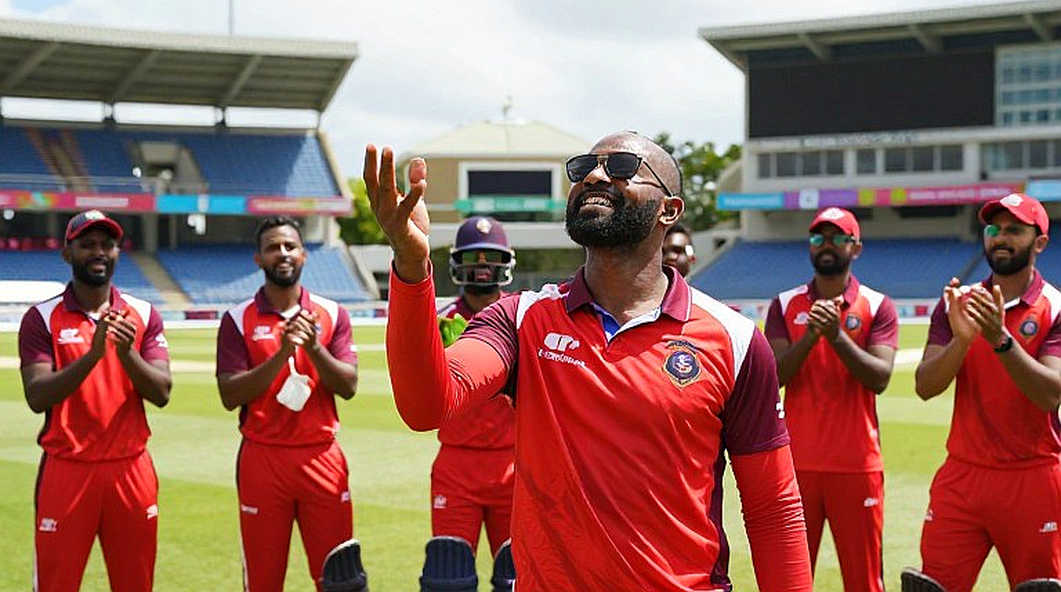
The match was an ACC Men's Under-19 Asia Cup Group A fixture staged in Oman — neutral ground for both sides, though the report does not explicitly label it a neutral venue. India won the toss and batted, lost four wickets for 42, got 107 from Arjun Rajput, and were bowled out for 208 in 46.3 overs. Pakistan slumped to 61/5 in reply, Hamza Zahoor made an unbeaten 100 from 108 balls, Dar added 38, and the chase was completed with three wickets and eleven balls to spare. It was Pakistan's second consecutive win of the tournament.
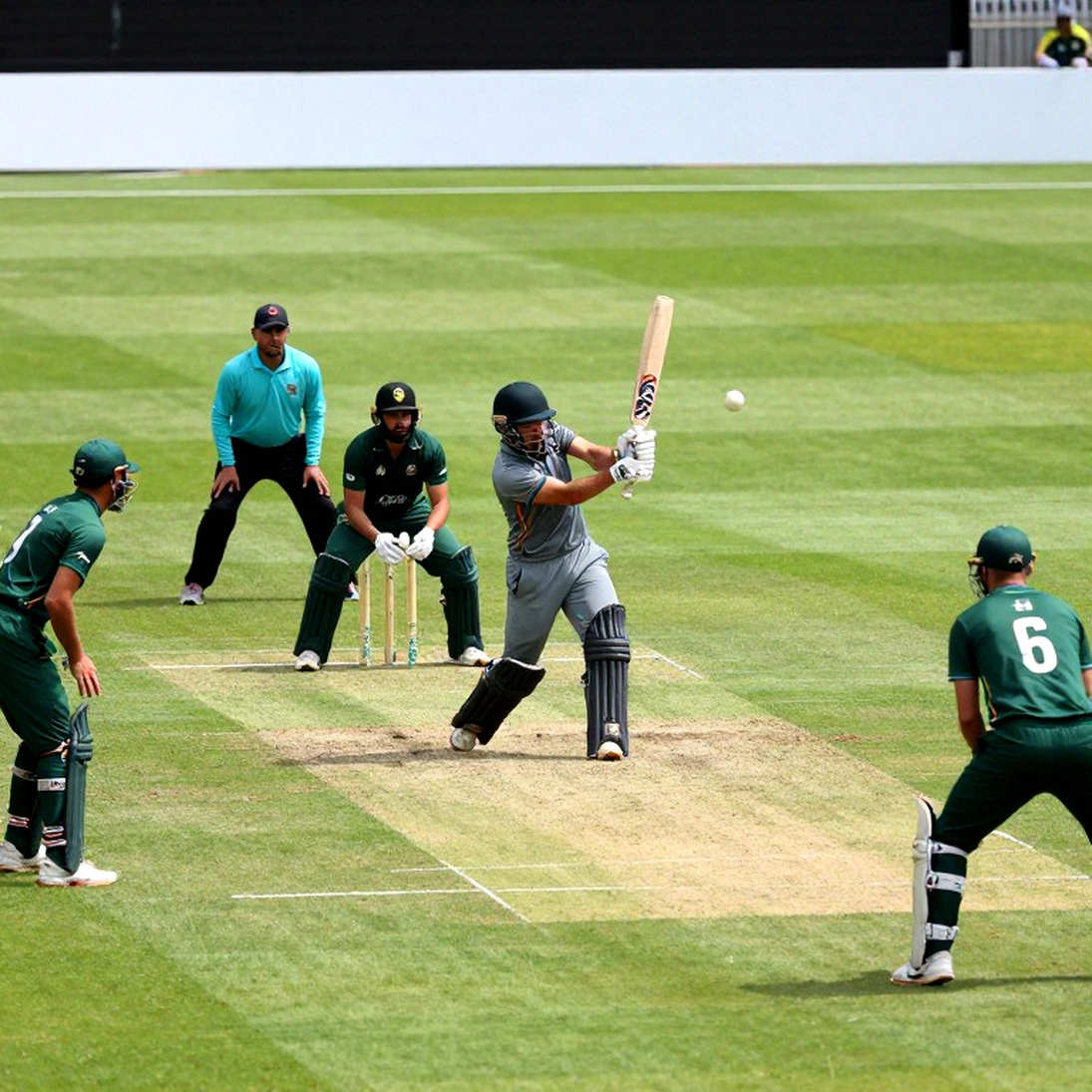
A transparency note on format: the source does not state the playing conditions. India being bowled out in 46.3 overs and Pakistan finishing with eleven balls left is consistent with a 45- or 50-over structure, so I am treating it as a fifty-over match — but that is inference, not verified fact. Pitch behaviour, weather, dew, wind and any DLS intervention are likewise absent. When you see 208 and 209 without a pitch report, the lazy conclusion is a slow surface; both sides scored at roughly four to four-and-a-half an over, India at about 4.47, which usually points that way. It remains a guess and I will not dress it as evidence.
Captain Lakshya Raichandani said two things afterwards, and both are the spine of this piece. First, that his side finished 20-30 runs short. Second, that the bowling did not execute the plan. It is not easy for a captain to concede a shortfall in a match that produced a century from one of his own batters. That admission is the most honest data point of the night.
Core: 166 against 148, and that is the whole match
One subtraction reframes everything, and I am surprised nobody has done it.
India were 42/4 and were bowled out for 208 — so the remaining six wickets produced 166 runs. Pakistan were 61/5 and won by three wickets, meaning they finished on 209/7 — so after the fifth wicket fell they added 148 runs for the loss of two more. India spent six wickets buying 166 runs. Pakistan spent two wickets buying 148. Both sides took an early blow; both tried to recover. The difference was not who scored more but who paid less to recover.
That subtraction has a limit and hiding it would be dishonest: India had to bat out an innings, Pakistan had a target and a ball count. A chasing side knows exactly what it needs; a side batting first has to guess what is enough. The asymmetry is real. But it only excuses so much — leaving twenty-one deliveries unused while losing six wickets is a planning failure in any format, not a miscalculation of par.
This is where the captain's "20-30 short" turns into arithmetic. India batted 46.3 overs; twenty-one balls went unused. At even six an over across those three and a half overs, twenty-one runs arrive — precisely the band Raichandani named. India's match was not lost in the first four wickets; it was lost in the last three overs, where the tail could not hold. The top-order collapse was covered by a century. The lower-order collapse had no century to cover it.
And now the missing number, arguably the most important in the match: Rajput made 107, and nowhere is it recorded how many balls he faced. That is not a routine gap; it determines the direction of the entire argument. If he faced 120 balls, his hundred was innings-saving and rate-binding at once. If he faced 95, the same innings was both fast and solid. Team selection, coaching assessment and the next match's balance differ across those two scenarios. In a 4 a.m. edit suite I once learned that a single number can be the spine of a story provided it does not lie. Here the number does not exist, so the story stays unfinished — and assuming Rajput was slow, or quick, is not reporting.
On Pakistan's side one number exists and it is decisive. Zahoor's unbeaten 100 came off 108 balls, a strike rate of about 92.6. Place that against the match's environment: India's entire innings ran at roughly 75. Zahoor did not merely make a hundred; he held the rate a 209 chase required, and that is the difference between surviving and winning. A target of 209 over fifty overs demands 4.18 an over. Zahoor faced 108 of Pakistan's 289 deliveries — about 37 per cent of the innings in one pair of hands. Staying that long while rebuilding from 61/5 is a statement, and it is exactly the role that gets dismissed with the word 'anchor' when it is in fact the hardest job on the ground.
India's bowling picture matches the captain's second sentence. Five wickets fell — no small achievement — but the sixth did not. Taking five wickets and breaking a set pair are different skills, and India had the first without the second. This is not grand theory; it is ordinary experience that when an opposition rebuilds from 60-odd for five, the most delicate passage is the next ten to fifteen overs, where a captain must choose between blocking runs and hunting wickets. India did not find that balance, or found it and could not hold it. Bowling figures are unavailable, so I cannot say who leaked runs or when the field changed. What can be said is that after 61/5 India conceded 148 and took two wickets.
The data most conspicuously absent is the kind Indian cricket discussion demands most: heatmaps, wagon wheels, phase economy. My long observation is that a heatmap shows where the ball landed, never why the field moved or when a bowler changed his line. Here even those maps are missing. When judging eighteen- and nineteen-year-olds, that matters more, because runs and wickets alone cannot fix a player's role inside a system.
Contrarian: the century is the least informative number here
Let me first put the consensus in its strongest form, because inverting it without that is worthless. The consensus is this: Pakistan handled pressure better, India could not close from 61/5, Rajput's hundred was wasted, and this is a turning point in Pakistan's confidence. None of that is wrong. On the level of result, it is probably the best explanation available.
But read the card asking what each number actually proves, and something odd appears. 107 is the number every report will put in its headline, and it is the number that tells us least about this match. A hundred inside a total of 208 does not mean a player was extraordinary; it means a player was alone. To separate the statement of solitude from the statement of contribution you need balls faced, and that was not printed. A hundred that leaves its team 20-30 short is neither good nor bad in itself — it is an unfinished account whose supporting material was left out of the report.
The second inversion concerns Pakistan's win. Credit will go to the journey from 61/5 to 209, but Pakistan won nothing at 61/5; at 61/5 they were merely alive. Pakistan won the match in the 148 runs that followed the fifth wicket, a passage with no milestone, no highlight clip and no noise. Cricket's memory is poor at storing such passages. A quiz in ten years will ask how many Zahoor made, not how many balls the sixth wicket cost.
The third inversion concerns the lesson Indian cricket will take. The milestone economy is so heavy that the system will conclude: we need more hundreds. The actual lesson was that twenty-one runs at six an over across the last twenty-one balls would have changed the result. A system that counts hundreds and not unused deliveries will keep losing by exactly these 20-30 runs — and will never learn where.
One more thing, because this was an India-Pakistan match and that noise buries data. In 2026, making a radio documentary on an IPL played in empty stadiums, I watched seventeen matches and understood that crowd sound sometimes covers the actual event. Here the crowd was not in a stand but in the commentary. In that weather it is easy to call one eighteen-year-old's innings the birth of a star and another's a failure under pressure. Neither claim is supported by one match's numbers.
Takeaway: what to watch next
India's next Group A fixture now has three concrete things worth watching, all generated by this one.
First, whether the lower order can bat out the final five overs. If they are again bowled out with overs unused, 46.3 will stop looking like an accident and start looking like a habit.
Second, India's bowling plan once an opposition is four or five down — attack for runs or attack for wickets, and at which over the approach changes. Whether 148 runs after 61/5 repeats is a real question.
Third, and for me the one that matters: whether any scorecard anywhere prints Arjun Rajput's balls faced. If it does and the figure is under about 110, the reading of this whole match changes, and the arithmetic of the captain's "20-30 short" changes with it. If it does not, we will all keep retelling a story whose most important part we never read.
Documentary scripts are just crowds we rebuild after the final whistle. Two scenes from this one will survive: a bat lifting India from 42/4, and a partnership lifting Pakistan from 61/5. A third — twenty-one balls left empty at 46.3 — will probably never make the cut. But those who count what the scorecard omits know where matches are usually decided.